
Hausa Fiction Genres Explained: Romance, Family Drama, Royal, Village and Social Stories
A practical genre guide for readers and writers who want to understand the differences between common types of Hausa fiction and what each promises its audience.
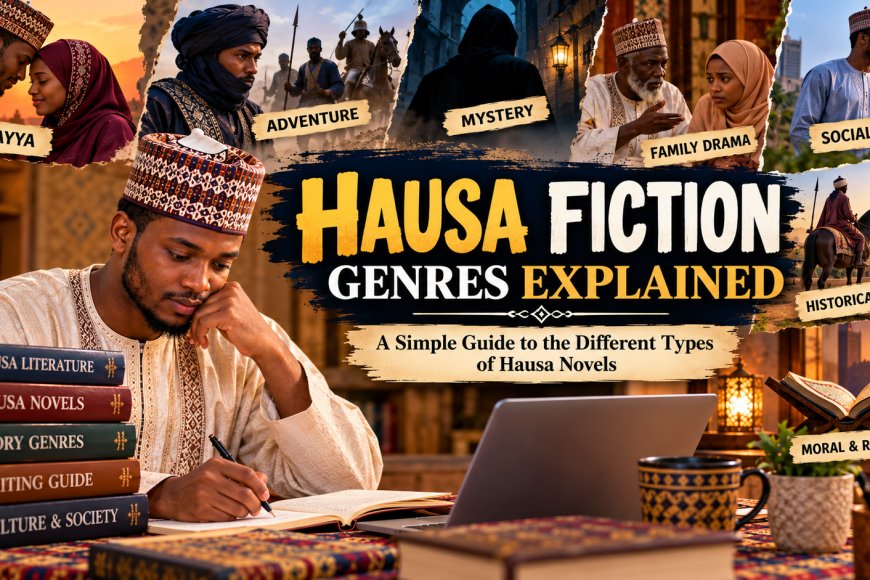
Genre is a promise between a story and its reader. It tells the reader what kind of emotional experience to expect, even though a strong novel may combine several genres at once. Hausa fiction is especially flexible because romance, family life, religion, status and community often overlap in the same story.
Romance and relationship fiction
Romance focuses on attraction, commitment, obstacles and the emotional decisions that shape a relationship. In Hausa fiction, this often connects directly to marriage, family approval, social class, education, jealousy or distance. A satisfying romance needs more than repeated misunderstanding: the central relationship should change because the characters learn, choose, sacrifice or confront something important.
Family drama
Family drama places relationships between relatives at the centre of the story. Parents and children, co-wives, siblings, in-laws and extended family may all influence the plot. The strongest family dramas avoid turning every difficult person into a simple villain. Instead, they show competing interests, old wounds, loyalty and the consequences of decisions made inside a household.
Royal and elite-setting stories
Royal stories use palaces, wealthy families, traditional authority or elite social circles as a setting. Readers often expect power differences, family reputation, inheritance, arranged relationships or competition for influence. Writers should research titles, customs and social behaviour carefully so the setting feels consistent rather than decorative.
Village and rural stories
Village fiction can explore community ties, farming, migration, tradition, local leadership, family reputation and the contrast between rural and urban life. The danger is stereotyping. A village should feel like a place where different people live, work, disagree and change—not a background made only of poverty or simplicity.
Social-issue fiction
Some novels are driven by a problem more than by a romance: education, domestic abuse, poverty, corruption, disability, migration, harmful social pressure or unequal treatment. The best social-issue stories still need characters with personal goals. A novel becomes stronger when the issue emerges through lived experience instead of turning every chapter into a lecture.
Religious and moral fiction
Faith, repentance, patience, responsibility and moral consequence are common themes in Hausa storytelling. Writers working in this area should distinguish between a character learning through experience and the narrator repeatedly telling the reader what to think. Drama is usually more powerful when values are demonstrated through choices and consequences.
Crime, mystery and suspense
Hausa fiction also supports crime, investigation, family secrets, disappearance, revenge and suspense. These stories depend heavily on structure. Clues, reveals and character knowledge must be controlled carefully so the ending feels earned.
How to classify a mixed-genre novel
Ask one question: what is the main reason a reader will continue? If the central question is whether a relationship survives, romance is probably primary. If the key tension is inside a household, family drama may be primary. If solving a hidden crime drives the story, mystery is likely primary. Secondary genres can then describe the rest of the experience.
For readers, genre makes discovery easier. For writers, it helps control expectations. For a literature platform, good genre information improves recommendations without reducing a complex story to one label.